Liever Nederlands? Lees het hier.
Citizen-science data reveal drivers of PFAS variability in backyard chicken eggs
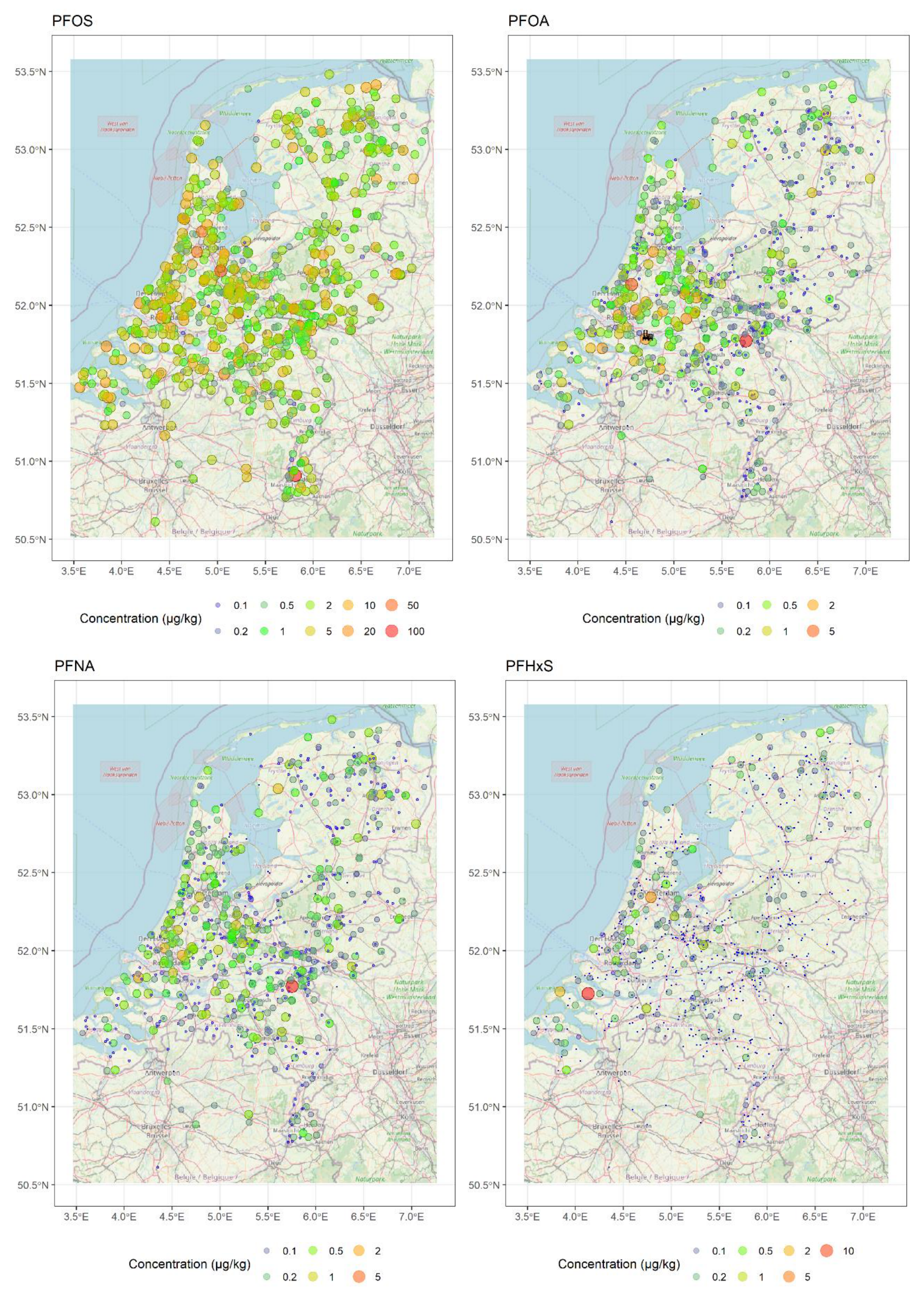
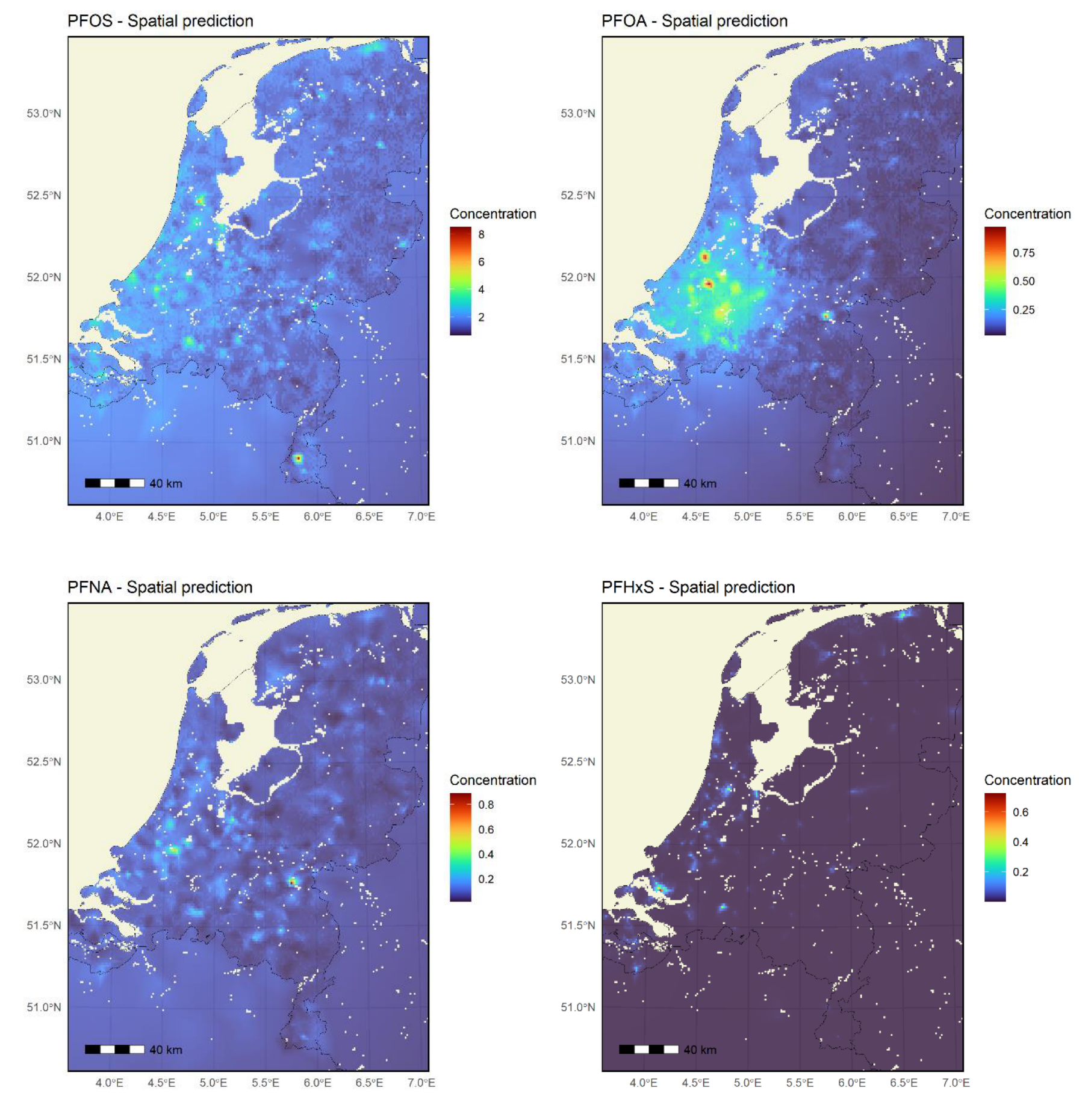
A citizen science analysis of 801 laboratory measurements shows that elevated PFAS concentrations in backyard eggs are not limited to local hotspots, but occur across the country. The data point most strongly to exposure via soil fauna and also reveal clear spatial patterns, including around Chemours and closer to the coast. We examined PFOS, PFOA, PFNA, and PFHxS, the four PFAS included in the European Food Safety Authority (EFSA) health-based assessment, often referred to as the EFSA-4. This document is a preprint, a scientific version published before peer review.
Key findings
- Based on 801 laboratory measurements submitted by citizens across the Netherlands, this study shows that elevated PFAS concentrations in backyard chicken eggs are widespread and not confined to a few local hotspots.
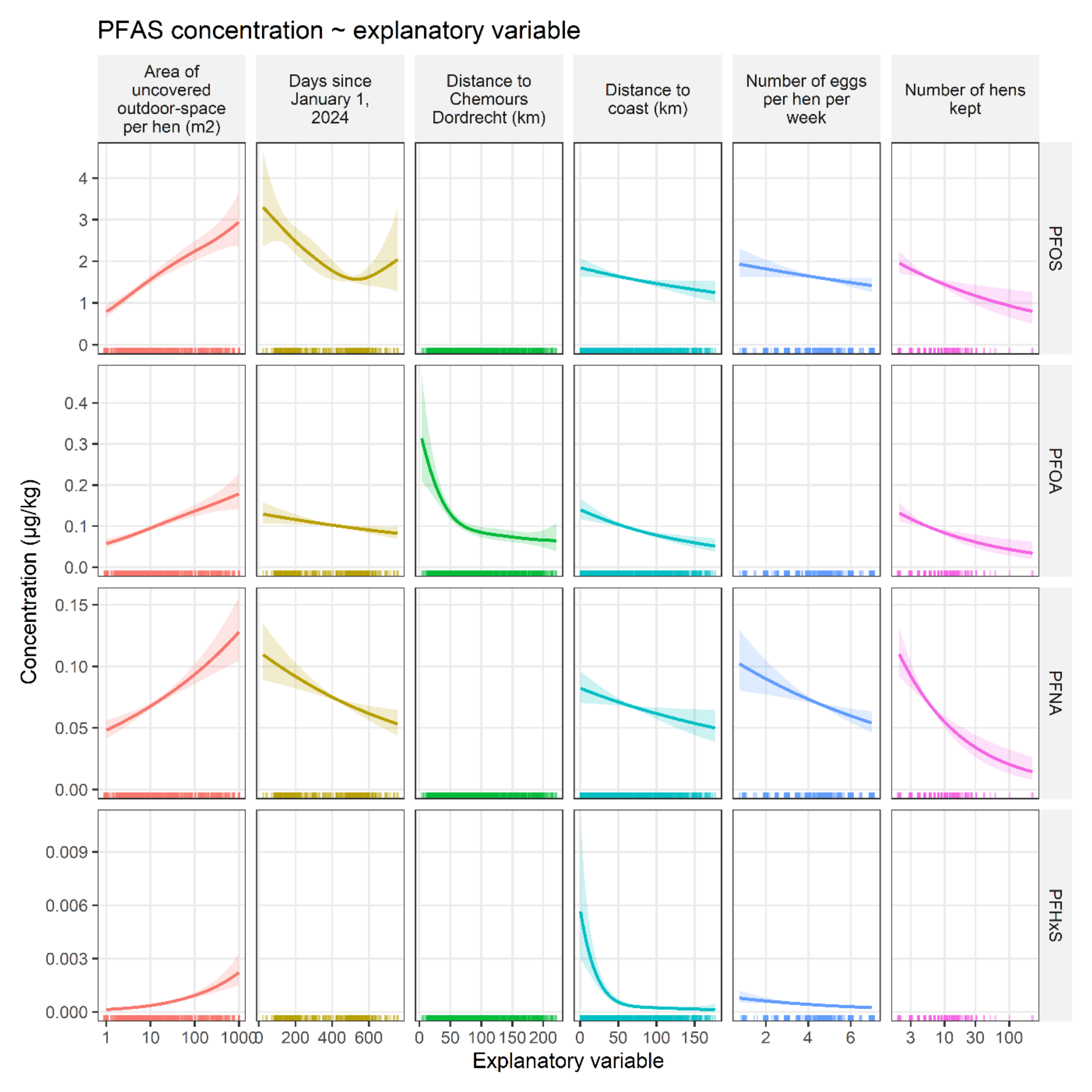
- The strongest route signal pointed to exposure via soil fauna: uncovered outdoor space per hen was the strongest predictor for PFOS, PFNA, and PFHxS, and the second most important predictor for PFOA after distance to Chemours. This is consistent with hens foraging more on worms, insects, slugs, snails, and other soil fauna.
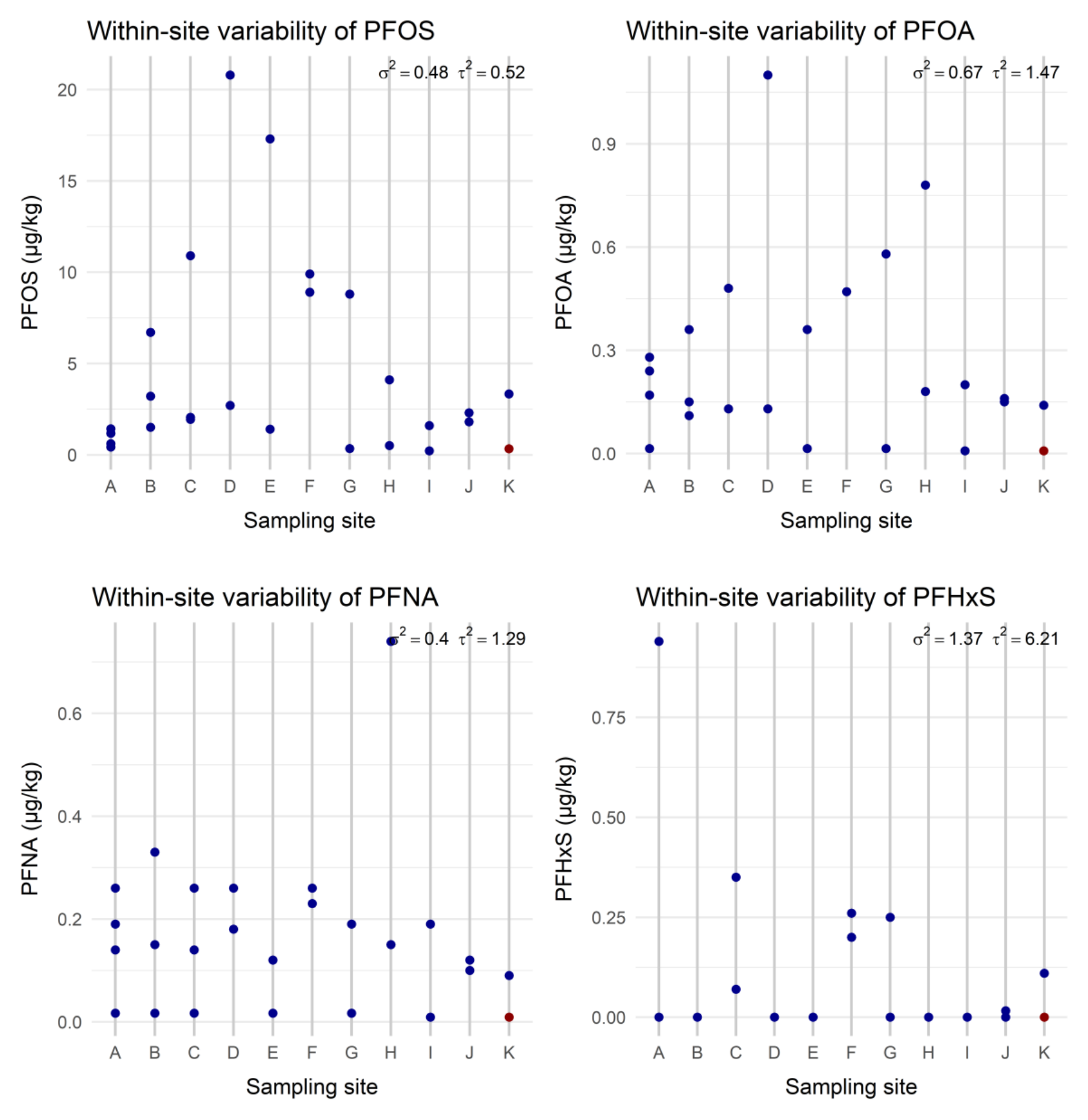
- One test is a snapshot: repeated sampling showed substantial variation over time within the same backyard. A single egg test should therefore not be interpreted as proof of safety over time.
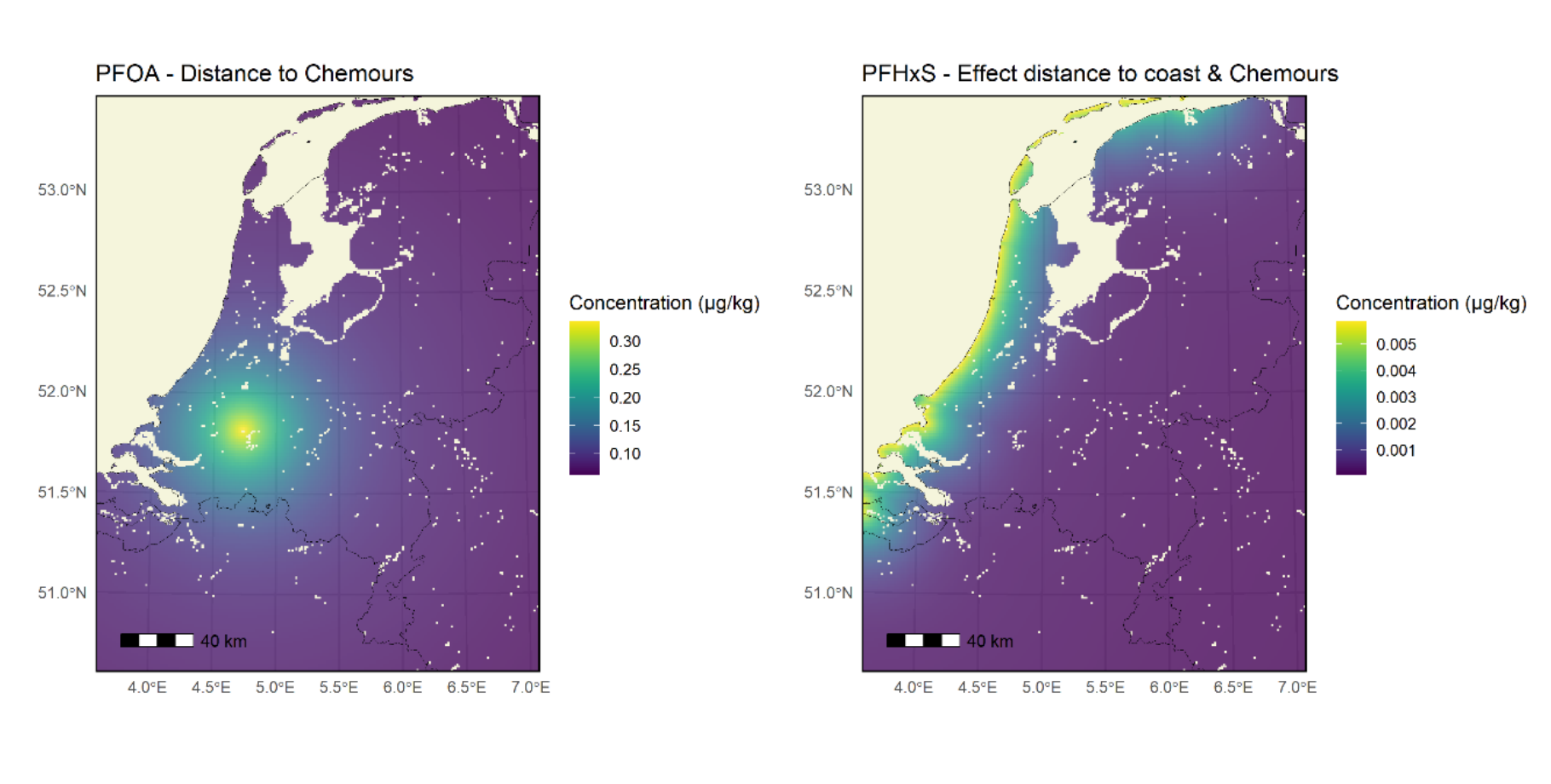
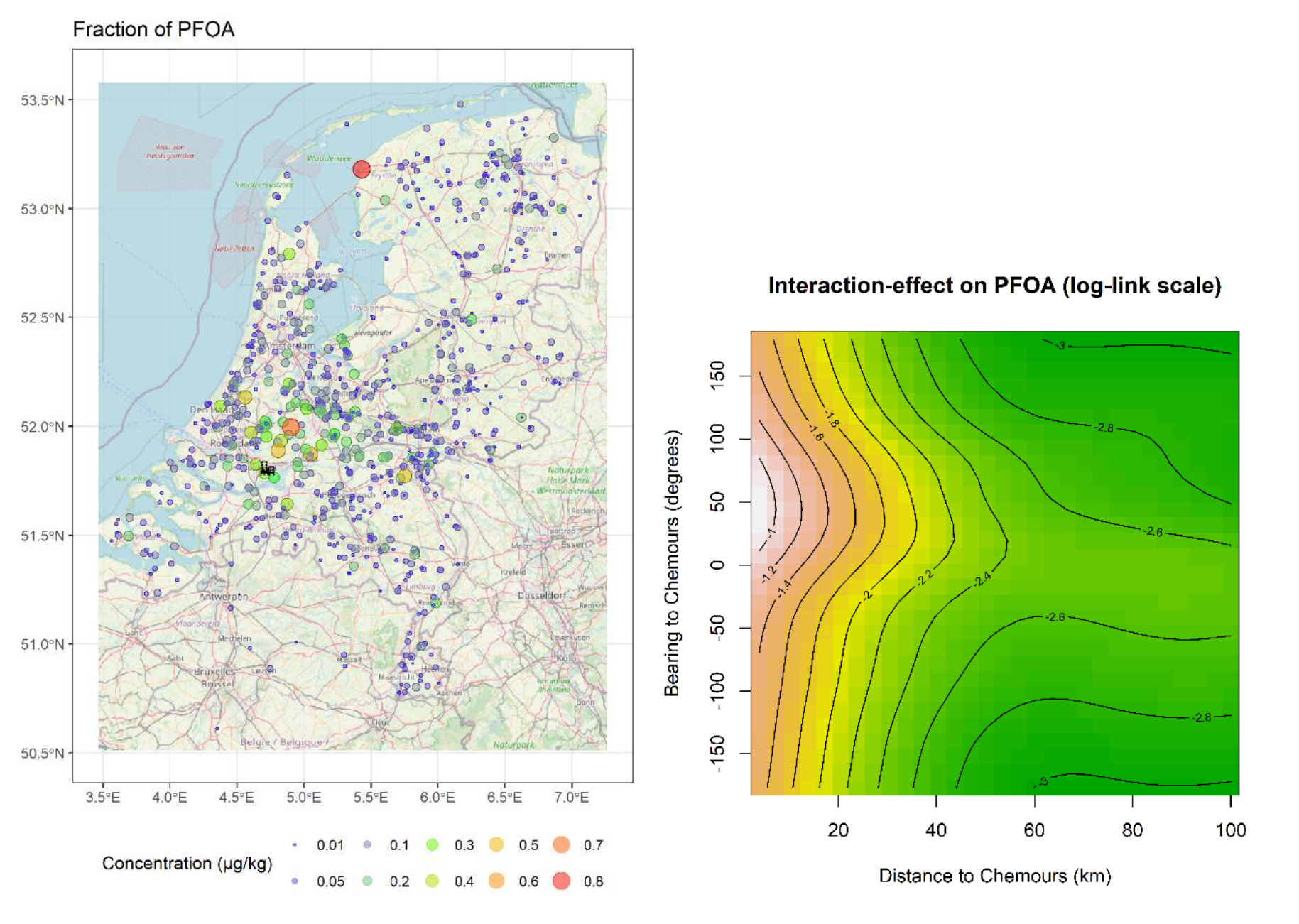
- Large-scale spatial drivers were clearly visible: all four PFAS showed higher concentrations closer to the coast, while PFOA also showed a strong distance effect relative to Chemours, with an estimated half-distance of about 34.5 km.
- Only 35.7% of samples complied with all applicable EU maximum levels combined, meaning just over a third were below all relevant limits.
- PFOS was the dominant compound, exceeding its EU maximum level in 62.0% of samples, while PFOA exceeded its limit in 20.2% of samples.
- Feed type and water source were not major explanatory factors: these categories were not significant in the final models. Continuous access to feed was associated with lower concentrations for some PFAS, possibly because it reduces uptake via soil fauna.
- No clear evidence of strong self-reporting bias was found: a comparison with an independent dataset showed highly similar distributions.
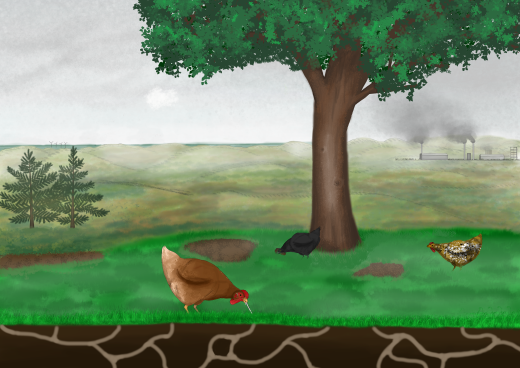
Scenario with high expected PFAS concentrations in eggs: hens have a large available outdoor space, live in a small flock, have low egg production, and are close to a fluorochemical plant and the coast (drawing by Annemarijn Aarts, daughter of one of the researchers, CC-BY-4.0).
Health context
To place the measured concentrations in a public health context, the report compares them with the EFSA tolerable weekly intake (TWI). Based on an average adult body weight of 78.6 kg and an average egg consumption of 18 g per day (about two eggs per week), replacing all consumed eggs with backyard eggs at the dataset mean would result in an intake of about 121% of the EFSA weekly limit for the EFSA-4 PFAS.
This calculation concerns egg intake only. It leaves no room within that weekly limit for other exposure sources, such as drinking water or other foods. This is an illustrative comparison for context, not individual dietary advice.
Key figures
The figures below highlight the main patterns: widespread contamination, high variability, an important role for soil fauna related exposure, and clear regional effects linked to Chemours and the coast.
Methods in brief
- Citizens paid for laboratory testing of backyard eggs and registered their results via pfasinkaart.nl. This analysis includes samples collected between 24 January 2024 and 27 January 2026.
- The analyses focused on the EFSA-4 PFAS: PFOS, PFOA, PFNA, and PFHxS, plus their sum.
- Generalised additive models (Tweedie family) were used to explore relationships between egg PFAS concentrations, husbandry variables, and spatial covariates.
- Potential reporting bias was assessed by comparing pfasinkaart.nl submissions with an independent dataset containing all results from one laboratory source.
Data access: Anonymised dataset and code, DANS repository
Privacy note: Sampling locations originate from private residential gardens. Exact coordinates are not publicly shared.
FAQ
What PFAS were analysed, and what do the EU maximum levels mean?
The report focuses on four legacy PFAS, PFOS, PFOA, PFNA, and PFHxS, often referred to as the EFSA-4. The EU has legally binding maximum levels for these individual compounds in eggs, and also for the sum of PFOS, PFOA, PFNA, and PFHxS.
How common were exceedances in this dataset?
In this dataset, 52.4% of samples exceeded the EU maximum level for the EFSA-4 sum, and only 35.7% were below all applicable EU maximum levels combined. PFOS was dominant and exceeded its EU maximum level in 62.0% of samples.
Why can results vary so much over time at the same backyard?
Repeated sampling showed high within-site variability, close to among-site variability. PFAS in soil and the wider environment are persistent, so temporal variation in eggs likely reflects changing exposure and uptake processes, for example variation in soil fauna availability, weather, and hen behaviour.
What factor best explained differences between backyards?
Across compounds, the strongest and most consistent association was uncovered outdoor space per hen. A larger outdoor foraging area per hen was associated with higher egg PFAS, pointing most plausibly to exposure via soil fauna rather than feed or water categories.
Is this mainly about Chemours?
No. The report identifies a clear PFOA signal around the Chemours plant in Dordrecht, with concentrations declining with distance and an estimated half-distance of about 34.5 km. But Chemours is only part of the picture. Elevated PFAS concentrations in backyard eggs were found across the Netherlands, as well as other compounds, and for the EFSA-4 sum, the patterns point to broader environmental deposition processes, including a coastal gradient, alongside exposure linked to outdoor foraging, most plausibly via soil fauna.
Does this identify the exact source for each backyard?
No. The study identifies national and regional patterns and plausible exposure pathways, but it does not assign a specific source to each individual location.
Is the citizen science data biased toward high results?
The report compared self-submissions to an independent dataset containing all results from one laboratory source over the same period. The distributions were highly similar, and no systematic reporting bias was detected.
Why do commercial eggs often contain much lower PFAS levels?
A likely explanation is that commercial hens are less exposed to contaminated soil and soil fauna than backyard hens. They often spend more time indoors, or close to the shelter, have continuous access to feed, and forage less intensively for worms, insects, slugs, snails, and other soil fauna, which our results suggest are an important PFAS exposure route into eggs. Commercial laying hens also tend to produce eggs at a high rate, which may reduce the amount of PFAS per egg. This study did not directly analyse commercial farms, but the pattern is consistent with the much lower PFAS concentrations often reported in retail eggs compared to in many backyard eggs. Commercial eggs were not part of the main study dataset. Separately, pfasinkaart.nl published one commercial egg test on the website as an informal point of comparison.
Can you still eat eggs from your own backyard chickens?
This study does not provide individual dietary advice, but it does show that PFAS concentrations in backyard eggs can vary substantially over time, even at the same location. A single laboratory result should therefore not be interpreted as proof of long-term safety. Given that variability, and the broader findings from the dataset, some backyard chicken owners, including the founder of pfasinkaart.nl, have chosen to stop eating their own eggs and to switch to commercial eggs instead.
About the authors
Geert Aarts is a quantitative ecologist at Wageningen University & Research. He became interested in the project because his household keeps chickens, which sparked his curiosity about the drivers of PFAS in eggs. The rich dataset and analysis on pfasinkaart.nl provided the first important clues, which naturally led to an extensive and enjoyable research collaboration with Dreas and Robin. What started as a quick analysis eventually culminated in the academic paper presented here.
Dreas van Donselaar is the initiator of pfasinkaart.nl. After testing eggs from his own backyard chickens for PFAS, he set out to share the result with others in the neighbourhood. What started as a simple attempt to make one test result useful for more people grew into a nationwide citizen-science dataset and the basis for this study.
Robin Lasters works as PFAS remediation coordinator at Natuurpunt, hereby focusing on remediation and ecological restoration of PFAS-impacted nature areas in Belgium. He conducted his doctoral research at the University of Antwerp in the field of environmental science on the factors influencing PFAS accumulation in backyard food, including chicken eggs. Drawing on this background, he contributed to the analysis and interpretation of the citizen-generated dataset and helped place the findings in the broader context of environmental PFAS contamination.
Press and contact
For press enquiries, interview requests, or scientific collaboration, please contact [email protected]. We are unable to provide individual advice on PFAS or backyard chickens, but answers to frequently asked questions will be added to the FAQ on this page.
Please refer to the PDF report as the primary source. This webpage is a readable summary prepared for pfasinkaart.nl.

Five backyard chicken eggs from different locations: two tested above the EU maximum levels for PFAS, one below, and two were not tested (photograph by Arjan van der Vegt and Liesbeth Paardekooper).